I just want to say hello, or “salutations”, as they said pre 19th century...
…and we still say in fundraising today!
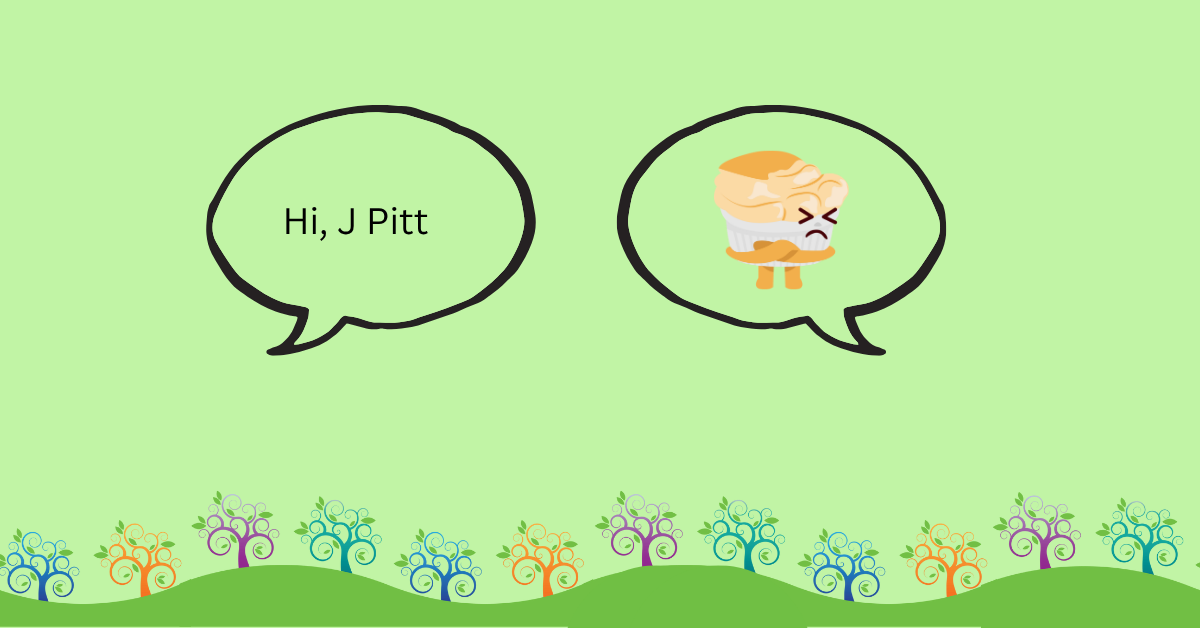
Have you ever received a piece of mail and opened it to see Dear J or Dear Pitt? I have, and it really flattens my soufflé.
It’s because not everyone provides the same name data. It’s a simple cause, but it seems that correcting it is beyond the understanding of most people.
You have to trust me on this…it’s really quite easy – let me introduce to you the…
…Salutation Matrix.
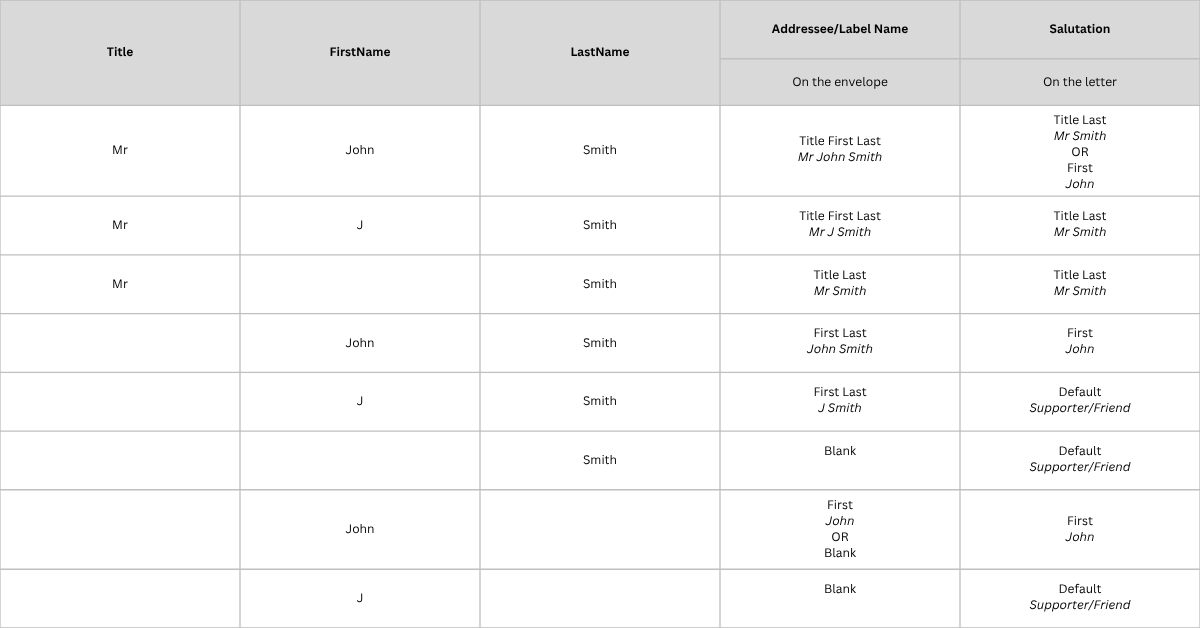
John Smith Salutation Matrix
Having one of these worked out ahead of doing a selection is incredibly helpful. You can use it to code into SQL, Access or Excel, and if you don’t know how to do it, ask the AI of choice to create the code or logic for you, so you can cut and paste into the Addressee and Salutation columns of your spreadsheet.
Here’s what Chat gave me for Excel.
Addressee:
=IF(AND(A2<>””, B2<>””, C2<>””), A2 & ” ” & B2 & ” ” & C2,
IF(AND(A2<>””, C2<>””), A2 & ” ” & C2,
IF(AND(B2<>””, C2<>””), B2 & ” ” & C2,
IF(B2<>””, B2, “Supporter/Friend”))))
Salutation:
=IF(AND(A2<>””, C2<>””), A2 & ” ” & C2,
IF(B2<>””, B2,
IF(A2=””, “Supporter/Friend”, “Supporter/Friend”)))
These would need adjusting, and you can get it to write exactly what you need if you tell it what columns you have. In my case I’ve got it to write VBA which is attached to a button so I can use it on any data.
Now you have no excuse to start your letters off with Dear J.
8 reasons why the correct salutation matters:
- Sets the tone instantly – the salutation is your first tonal cue, whether warm, formal, playful, or urgent. It primes the reader’s emotional response.
- Signals respect and cultural awareness – tailoring greetings to context (e.g., “Dear Professor,” “Hi team,” “Salutations”) shows you understand hierarchy, formality, and audience expectations.
- Builds trust and rapport – a well-chosen salutation feels personal and intentional, reinforcing authenticity and care, especially in donor or client relationships.
- Avoids tone mismatches – starting with “Hey!” in a regulatory update or “Dear Sir/Madam” in a warm appeal can jar the reader. The right salutation prevents cognitive dissonance.
- Supports brand voice consistency – whether your tone is dignified, cheeky, or mission-driven, the salutation anchors your voice and aligns with campaign messaging.
- Enhances accessibility and clarity – clear, audience-appropriate greetings help neurodiverse readers and those scanning quickly to orient themselves in the message.
- Improves deliverability and engagement. -in email campaigns, personalised salutations (e.g., “Hi Julie”) can boost open rates and reduce spam flags.
- Supports segmentation and A/B testing – varying salutations across audience segments lets you test emotional resonance, formality preferences, and engagement impact.